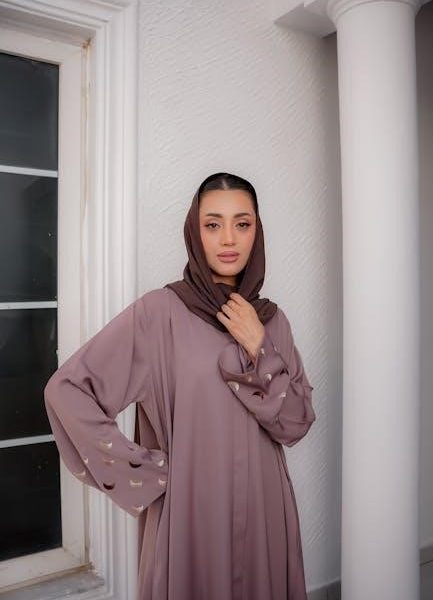
abaya size guide
Abaya Size Guide: A Comprehensive Overview (Updated 02/06/2026)
Navigating abaya sizing requires understanding varying styles, regional charts, and fabric impacts; this guide ensures a comfortable and modest fit for every woman, offering detailed measurements.
Understanding Abaya Styles and Fits
Abayas exhibit diverse styles, significantly influencing fit. Traditional cuts are generally loose and flowing, prioritizing modesty and comfort, often accommodating a range of body types without strict sizing. However, contemporary designs introduce tailored silhouettes – open abayas, kimono styles, and closed abayas – each demanding specific sizing considerations.
Open abayas, designed to be worn over clothing, typically require a focus on shoulder width and sleeve length for a flattering drape. Closed abayas, forming a complete outfit, necessitate accurate bust, hip, and overall length measurements. Kimono abayas blend comfort and style, with sizing centered around bust circumference and desired coverage. Understanding these distinctions is crucial for selecting the appropriate size, ensuring both aesthetic appeal and comfortable wear. Fabric weight also plays a role; heavier fabrics may require a slightly larger size for ease of movement.
Standard Abaya Sizing vs. Designer Variations
While a general abaya size range (52-60, and 62+) exists, significant variations occur between standard brands and designer labels. Standard sizing often follows a more universal approach, prioritizing broader fit compatibility, typically based on bust circumference and height. However, designer abayas frequently employ more precise sizing, reflecting their specific design aesthetics and target customer.
These variations stem from differing cutting techniques, fabric choices, and brand-specific fit philosophies. Designer abayas may offer more tailored fits, requiring more accurate measurements for optimal results. It’s crucial to consult each brand’s individual size chart, as a size ‘56’ from one designer might not equate to the same fit from another. Always prioritize reviewing detailed measurements – bust, hip, and length – rather than relying solely on numerical size designations.
Key Measurements for Accurate Sizing
Achieving the perfect abaya fit hinges on precise measurements. Begin with the bust: measure around the fullest part of your chest, keeping the tape measure level. Next, measure your hip circumference at the widest point. Crucially, accurate height measurement is vital, as it directly correlates with abaya length. Ensure you’re standing straight and have someone assist for the most accurate results.
Don’t rely on your usual clothing size; abayas are designed for a loose, comfortable fit. Compare your measurements against the specific size chart provided by the retailer or designer. Pay attention to whether measurements are in centimeters or inches. A slight difference in measurements can significantly impact the overall fit and drape of the abaya. Prioritize these key measurements for a confident purchase.
Bust Measurement Guide
Accurately measuring your bust is paramount for selecting the correct abaya size. Stand naturally with your arms relaxed at your sides. Use a flexible measuring tape, ensuring it’s level around your back and across the fullest part of your bust. Avoid pulling the tape too tightly, or holding your breath during measurement – this will distort the result.
Measure approximately 2.5 cm (around 1 inch) below your underarm for the most accurate reading. If your measurement falls between sizes, it’s generally recommended to size up, given the loose-fitting nature of abayas. Remember that bust size is a primary determinant of fit, influencing the overall silhouette and comfort. Double-check your measurement and compare it carefully to the size chart provided.
Hip Measurement Guide

Determining your hip measurement is crucial for ensuring a comfortable and flattering fit, especially for abaya styles that are more fitted or have a defined silhouette. Stand with your feet together and your weight evenly distributed. Wrap a flexible measuring tape around the fullest part of your hips and buttocks, keeping the tape level all the way around.
Ensure the tape isn’t too tight, allowing for comfortable movement. Measure around 4.5 inches (approximately 11.4 cm) from your waistline. Like with the bust measurement, if you fall between sizes, consider sizing up for a more relaxed fit. Hip measurements are particularly important for open abaya styles or those with a more structured design. Accurate hip measurement contributes to the overall drape and appearance of the abaya.
Height and Abaya Length Correlation
Abaya length is significantly influenced by your height to achieve a graceful and proportionate look. Standard abaya lengths typically range, but finding the perfect length prevents tripping or a hem that feels too short. Measure from your shoulder to the desired hemline – commonly at the ankles or slightly above. Consider your footwear; if you frequently wear heels, account for that extra height when determining the ideal length.
Size charts often correlate height ranges with abaya sizes (e.g., 5’3”/160cm corresponds to size 54). Variations exist between styles; kimono abayas may require different length considerations than closed abayas. A longer abaya can offer more modesty and elegance, while a shorter length might be preferred for a more modern aesthetic. Accurate height measurement is key to a well-fitted abaya.
Abaya Size Charts by Region (CM & Inches)
Abaya sizing isn’t universally standardized; regional variations are common, necessitating specific charts for accurate selection. Manufacturers in different areas may employ slightly different cut and measurement approaches. Understanding these nuances is crucial for online purchases. Generally, charts provide bust, hip, and height measurements in both centimeters (cm) and inches.
A standard chart might feature sizes ranging from 52 to 60, correlating to specific bust measurements (e.g., 54 = 89cm/35 inches). Plus-size charts begin around 62 and extend upwards, accommodating larger frames. Always prioritize checking the specific chart provided by the retailer, as discrepancies can occur. Comparing your measurements to the chart is vital for avoiding incorrect sizing and ensuring a comfortable fit.
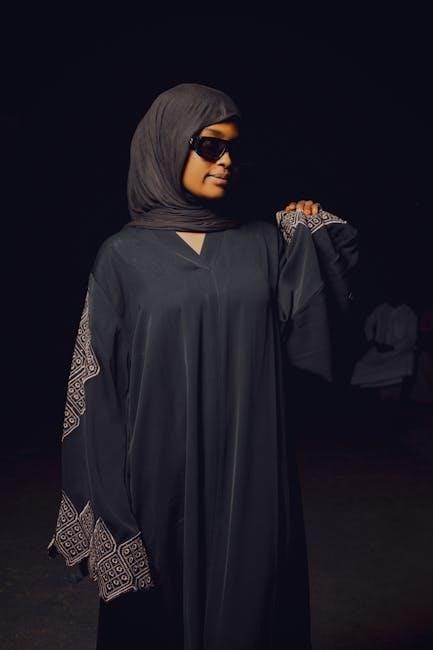
Standard Abaya Size Chart (52-60)
The standard abaya size range, typically 52-60, caters to a broad spectrum of body types. Size 52 generally fits a bust measurement of approximately 81cm (32 inches) with a height of 161-165cm (5’3” – 5’5”). Progressing to size 54, the bust expands to around 89cm (35 inches) and height to 165-168cm (5’5” – 5’6”). Size 56 usually corresponds to a 97cm (38 inches) bust and 165-170cm (5’5” – 5’7”) height.
Continuing, size 58 fits a 105cm (41 inches) bust and 170-173cm (5’7” – 5’8”) height, while size 60 accommodates a 113cm (44 inches) bust and 173-175cm (5’8” – 5’9”) height. Sleeve length and overall abaya length also vary within this range. Always consult the retailer’s specific chart, as slight variations exist.
Plus Size Abaya Size Chart (62+)
For abaya sizes 62 and above, accurate measurements are crucial for a comfortable and flattering fit. Size 62 typically accommodates a bust measurement of around 121cm (47.6 inches) and a height of approximately 175-178cm (5’9” – 5’10”). Moving to size 64, the bust expands to roughly 129cm (50.8 inches) with a corresponding height of 178-180cm (5’10” – 5’11”).
Size 66 generally fits a bust of 137cm (54 inches) and a height of 180-183cm (5’11” – 6’0”). Larger sizes, like 68 and 70, continue this progression, accommodating increasingly generous bust and height measurements. Remember that abayas are designed for a loose fit, but precise sizing ensures optimal drape and coverage. Always prioritize checking the specific brand’s size chart for the most accurate guidance.
Decoding Abaya Size Labels
Understanding abaya size labels can be surprisingly complex, as conventions vary between brands and regions. Many labels utilize a numerical system (52, 54, 56, etc.), which doesn’t directly correlate to standard US or European dress sizes. These numbers often represent the total circumference of the abaya at its widest point. It’s vital to consult the specific brand’s size chart, as a size 56 in one store might fit differently elsewhere.
Some labels also include corresponding UK or EU sizes, but these can be inconsistent. Pay close attention to the listed measurements – bust, hip, and length – rather than relying solely on the numerical or alphabetical size. Look for details regarding the abaya’s cut (slim fit, loose fit) as this impacts how it will drape and fit your body type.
Specific Abaya Styles and Their Sizing
Abaya styles significantly influence sizing considerations. Open abayas, designed to be worn over clothing, generally require a looser fit, allowing for comfortable layering. Prioritize bust and shoulder measurements when selecting a size for this style. Closed abayas, often worn as a single garment, may offer a more tailored fit, so hip measurements become crucial.
Kimono abayas present unique sizing needs due to their wrap-style construction. Sleeve length and overall width are key factors; a wider kimono style accommodates broader shoulders and layering. Always check the brand’s specific guidance, as kimono abayas can vary in width and length. Consider your height when choosing, ensuring the length is appropriate for your preference.
Open Abaya Sizing Considerations
When selecting an open abaya, prioritize a relaxed fit to comfortably accommodate clothing underneath. Focus primarily on bust and shoulder measurements, ensuring ample room for movement. Unlike closed abayas, hip measurements are less critical, as the garment doesn’t typically cinch at the waist.
Refer to size charts and pay attention to the abaya’s width, particularly across the chest and shoulders. A slightly larger size is often preferable to avoid feeling constricted. Sleeve length is also important; ensure it doesn’t interfere with undergarments or clothing. Consider the fabric’s drape – lighter fabrics may require a more precise fit, while heavier fabrics offer more forgiveness.
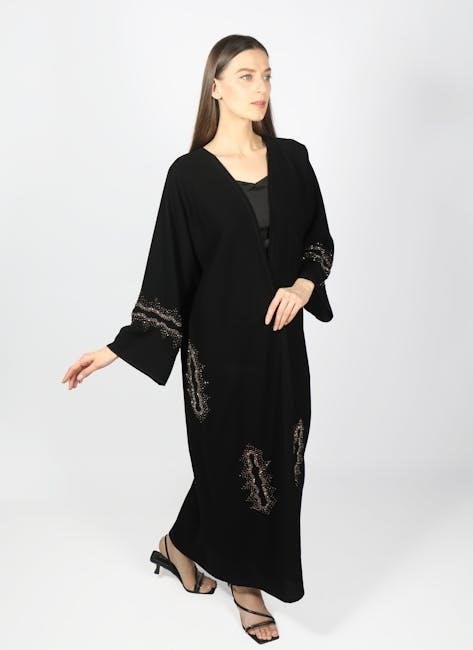
Closed Abaya Sizing Considerations
Closed abayas, designed for a more fitted silhouette, require careful attention to bust, waist, and hip measurements. Accurate measurements are crucial, as these garments often cinch or have a defined shape. Prioritize bust and hip measurements, ensuring sufficient room for comfortable layering without appearing overly tight.
Consider the abaya’s closure type – zippers, buttons, or ties – and how it impacts the fit. Check the length, ensuring it aligns with your height and preferred style. Pay attention to shoulder width, as this affects how the abaya drapes. If between sizes, it’s generally advisable to size up for greater comfort and ease of movement, especially with less stretchy fabrics.
Kimono Abaya Sizing Considerations
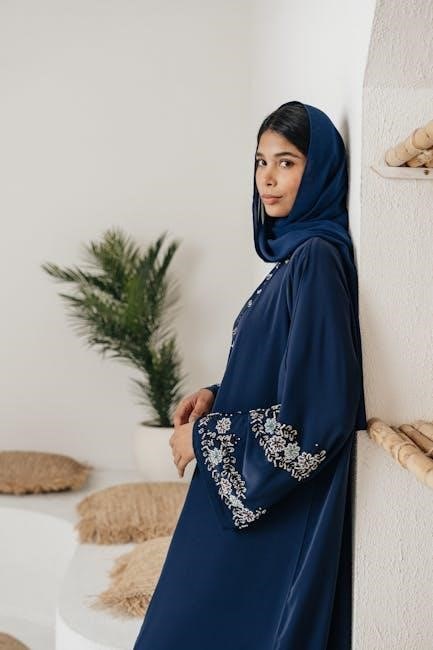
Kimono abayas, characterized by their open-front design and wide sleeves, offer a relaxed and flowing fit. Sizing focuses primarily on shoulder width and length, as the garment isn’t typically fitted across the bust or waist. Measure shoulder width accurately to ensure the sleeves fall correctly and don’t feel restrictive.
Length is also key; consider your height and desired coverage. These abayas often include a tie or belt, allowing for some adjustability at the waist. However, it’s best to choose a size that closely matches your shoulder measurement for optimal drape. Due to the loose nature of the style, sizing up slightly won’t drastically alter the appearance, offering added comfort.
Fabrics and Their Impact on Fit
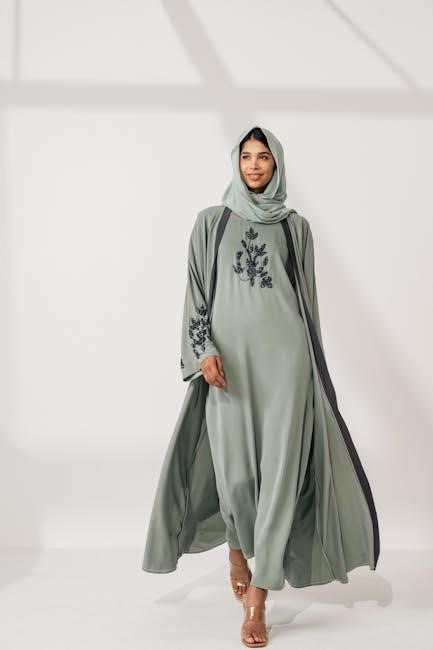
The fabric composition of an abaya significantly influences its fit and drape. Lightweight fabrics like chiffon and georgette offer a flowing, airy feel and tend to be more forgiving in terms of sizing, allowing for a looser silhouette. Heavier materials, such as crepe or silk, provide more structure and may require a closer fit to maintain the desired shape.
Fabrics with stretch, like those blended with spandex, offer greater flexibility and comfort, accommodating slight variations in body shape. Consider the fabric’s weight and texture when selecting your size; a heavier fabric might feel constricting if sized too small, while a lighter fabric may appear shapeless if sized too large. Arab Abaya Fabric is specialized;
Tips for Choosing the Right Size Online
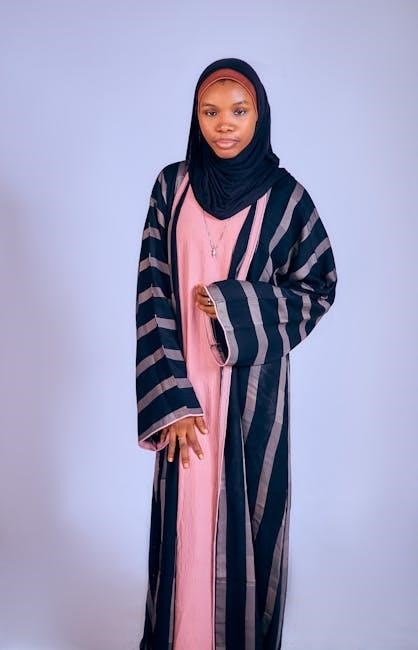
Shopping for abayas online necessitates careful consideration. Always prioritize reviewing the specific brand’s size chart, as variations exist beyond standard sizing (52-60, 62+). Accurately measure your bust, hip, and height – these are crucial determinants for a proper fit. Compare your measurements against the chart, noting whether it’s in centimeters or inches.
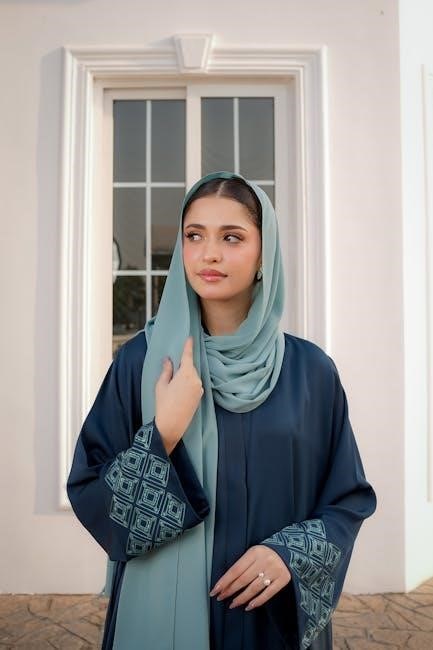
Read customer reviews; they often provide valuable insights into whether an abaya runs true to size, large, or small. Pay attention to fabric descriptions, as materials impact fit. If unsure between sizes, consider opting for the larger size, given the abaya’s loose design. Check return policies before purchasing, ensuring a hassle-free exchange if needed.
Dealing with Size Discrepancies & Returns
Despite careful measurements, size discrepancies can occur when purchasing abayas online. First, thoroughly review the retailer’s return policy before making a purchase. Understand the timeframe for returns and any associated costs, like shipping fees. If the abaya doesn’t fit, contact the seller immediately to initiate a return or exchange.
Clearly document the issue with photos showcasing the size discrepancy. Keep all original packaging and tags intact. Be prepared to provide your order number and measurement details. If the seller is unresponsive or unwilling to resolve the issue, consider contacting your payment provider for assistance. Prioritize retailers with transparent and customer-friendly return processes.
Abaya Size Guide for Different Body Types
Selecting the perfect abaya considers individual body shapes. For pear-shaped figures, an A-line abaya balances wider hips. Hourglass figures benefit from belted or tailored styles emphasizing the waist. Apple-shaped bodies may prefer flowing, empire-waist designs that skim over the midsection. Rectangular shapes can create curves with abayas featuring ruffles or embellishments.
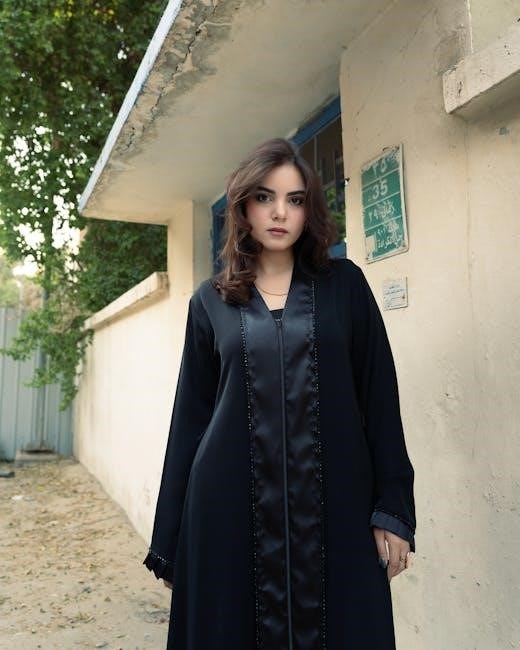
Petite frames should opt for shorter lengths to avoid being overwhelmed by fabric, while taller individuals can confidently wear longer, dramatic styles. Plus-size figures should prioritize abayas with generous cuts and comfortable fabrics. Remember, abayas are designed for modest coverage and comfortable wear, so prioritize fit and fabric over strict sizing.
Custom Abaya Sizing Options
For a truly perfect fit, many retailers and designers offer custom abaya sizing. This involves providing precise measurements – bust, waist, hips, height, and sleeve length – to create an abaya tailored specifically to your body. Customization extends beyond size, encompassing fabric choices, embellishment details, and overall style preferences.
This option is ideal for individuals with unique body shapes or specific design requests not readily available in standard sizes. While generally more expensive than off-the-rack options, a custom abaya guarantees a flattering and comfortable fit. Expect a longer turnaround time due to the bespoke nature of the process. Explore online platforms and local boutiques offering custom abaya services for a personalized experience.
Resources for Finding Your Perfect Fit
Numerous online resources and communities can aid in finding your ideal abaya size. Many retailers provide detailed size charts, often including both centimeters and inches, alongside customer reviews offering fit insights. YouTube channels frequently feature abaya haul videos and sizing guides, showcasing real-body examples.
Dedicated online forums and social media groups focused on modest fashion provide platforms to ask questions, share experiences, and receive personalized recommendations. Don’t hesitate to contact the retailer directly with specific measurement concerns; their customer service teams can offer tailored advice. Exploring these resources empowers informed purchasing decisions, minimizing returns and maximizing satisfaction with your abaya selection.
Leave a Reply
You must be logged in to post a comment.